
You don’t need a dog who can high-five and play dead. You need a dog who can sit when a delivery driver shows up, come back when they bolt for the street, and let go of the chicken bone they found under the bench. That’s it. That’s the whole game. Master five commands and you’ve got a dog who can move through the world safely. Let me break them down.
1. Sit
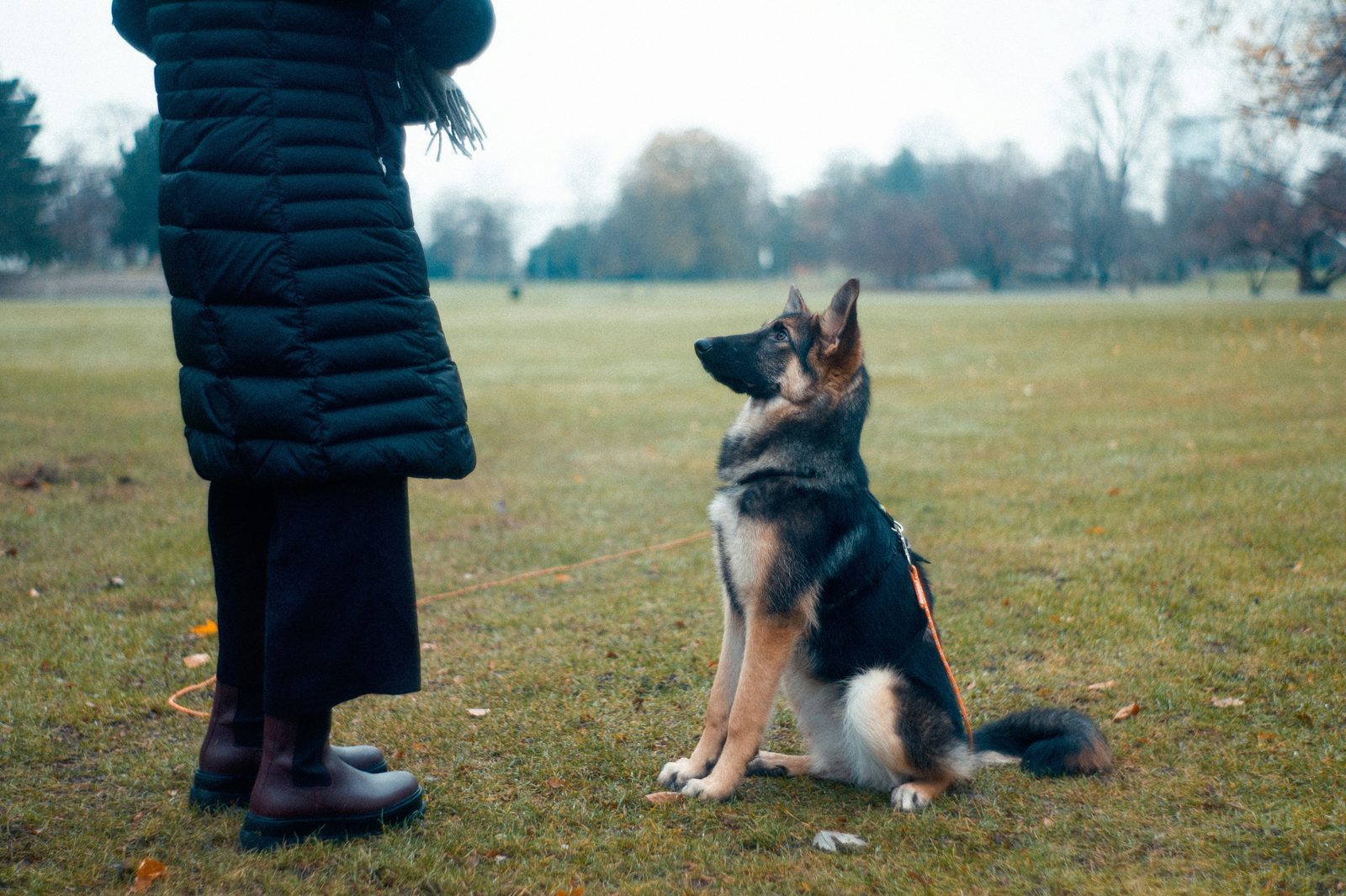
Yeah, I know, “sit” feels too basic to even count. But here’s the thing: sit isn’t just sit. Sit is your emergency button. Door opens unexpectedly? Sit. Toddler runs over? Sit. Dog jumps on grandma? Sit. A reliable sit is the foundation of every polite-dog moment that comes later.
How to teach it in 5 minutes:
- Hold a treat just above your dog’s nose.
- Move the treat slowly back over their head. Their nose follows up, butt drops down. The moment the butt hits floor, mark it with a “yes!” and give the treat.
- Do 5-10 reps. Don’t say the word “sit” yet.
- Once the butt-drop is happening reliably, start saying “sit” right as you do the hand motion. After about 50 reps you can drop the hand motion entirely.
Pro move: generalize early. Practice sit in the kitchen, at the front door, on a walk, near a squirrel. A sit that only works in the living room isn’t a real sit.
2. Stay
Stay is the dog parent’s superpower. Door open? Stay. Crossing a parking lot? Stay. Vet pulls out the needle? Stay. A dog who can stay is a dog you don’t have to physically restrain.
The 3D method: stay has three dimensions you have to train separately:
- Duration. How long they hold it.
- Distance. How far you can move away.
- Distraction. What else is going on around them.
Train only ONE at a time. Beginners blow this constantly by trying to walk away (distance) AND wait 30 seconds (duration) AND have the kids running around (distraction) all at once. The dog fails. The owner gets frustrated. Quit.
Start with duration. Sit, wait 1 second, treat, release. Then 2 seconds. Build to 30 seconds before you take a single step away. Then add distance. Then add distractions. One dimension at a time.
Release cue. Stay isn’t over until YOU say it’s over. Pick a release word — “free,” “okay,” “all done” — and use it every time. Otherwise your dog decides when stay is over, which means the cue means nothing.
3. Come (Recall)
The most important command in this entire list. A dog with a reliable recall is a dog whose life is bigger. They get off-leash time, they get dog parks, they get hikes. A dog with no recall lives on a 6-foot tether their whole life.
Recall rules nobody tells you:
- Recall is always rewarded. Every. Single. Time. For the rest of your dog’s life. The day you stop paying for recall is the day it starts dying.
- Never call your dog to punish them. Never call them for nail trims, baths, vet visits, scolding. If something unpleasant is about to happen, go get them. Don’t poison the cue.
- Don’t call if you can’t enforce it. If you call and your dog ignores you, you just taught them that “come” is optional. Until the recall is bulletproof, only call when you’re 99% sure they’ll come (you have a long line, they’re already heading toward you, etc).
5-minute drill: put a high-value treat in a pouch. Wait until your dog is distracted by something boring — sniffing the floor, hanging out. Take 5 steps away. Crouch. Say their name once, then your recall word (“here!”). The second they look at you, run backwards, throw a treat party. Repeat 10 times. Do this drill 3 times a day for 2 weeks.
4. Leave It
Leave it is the dog command that has saved more dogs’ lives than any other. Chicken bone on the sidewalk. Dropped Tylenol. Mouse poison in the alley. Leave it is the cue that says: that thing is not yours, do not engage.
The teach:
- Put a boring treat in your closed fist. Show your dog. They will sniff, lick, paw, get frustrated.
- The instant they pull their face away from your fist, even for a second, mark (“yes!”) and give them a DIFFERENT, BETTER treat from your other hand.
- After 10 reps, start saying “leave it” right before they look away. After 50 reps, you can say “leave it” and they’ll stop trying.
- Build difficulty: put the treat on the floor under your foot. Then uncovered on the floor. Then you toss it past them. Then real-world objects — dropped food, sidewalk trash.
Critical rule: leave it isn’t punishment. It’s an instruction. “Leave that, I have something better.” Tone of voice should be calm and confident, not scary.
5. Name Recognition (the secret 5th)
Most lists put “down” or “heel” here. Both are useful, neither is essential. But name recognition — your dog turning their head when you say their name, every single time, in every environment — is the substrate every other cue is built on.
A dog who doesn’t know their name has no orienting cue. They miss the start of every other command. They’re effectively deaf to you.
How to bake it in:
For two weeks, every time your dog spontaneously looks at you, say their name and immediately give a treat. Don’t call them. Just label the eye contact when it happens.
You’re teaching them: the sound of your name = my human’s attention = good things. After 200 reps of this in different rooms, your dog will be turning toward you like a tracking radar every time you say their name. That’s the foundation of everything.
How to schedule the whole thing
Five minutes a day per command is plenty. Don’t try to drill all five at once — pick one command per week, master it in low-distraction settings, then start blending it into real life. Twelve weeks from now you’ve got a dog who can sit, stay, come, leave it, and orient on cue. That’s a dog who’s safe in the world.
When to get professional help
The five commands above respond to consistent practice. But call in a positive-methods trainer or veterinary behaviorist if:
- After 8+ weeks of daily 5-minute drills, your dog isn’t picking any of them up. There’s usually an underlying issue — a hearing problem, anxiety, undiagnosed pain — worth ruling out.
- Your dog gets aggressive when you try to enforce a cue (lunges, snaps, bites). Stop and bring in a pro.
- You need these commands to be reliable around a specific safety situation (toddler, busy street, other animals). An in-person session shortcuts the generalization work.
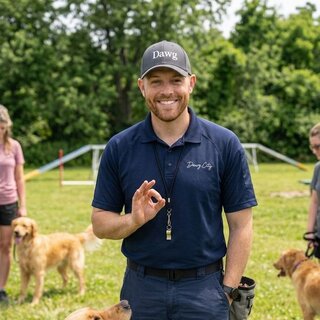
Practice this with Coach Calvin in the Dawg app. Free to download, personalized to your dog. The 7-level notebook walks you through all five commands across a 12-week curriculum — daily 5-minute drills, video demos, and a check-in that adjusts difficulty based on how your dog is doing.
