

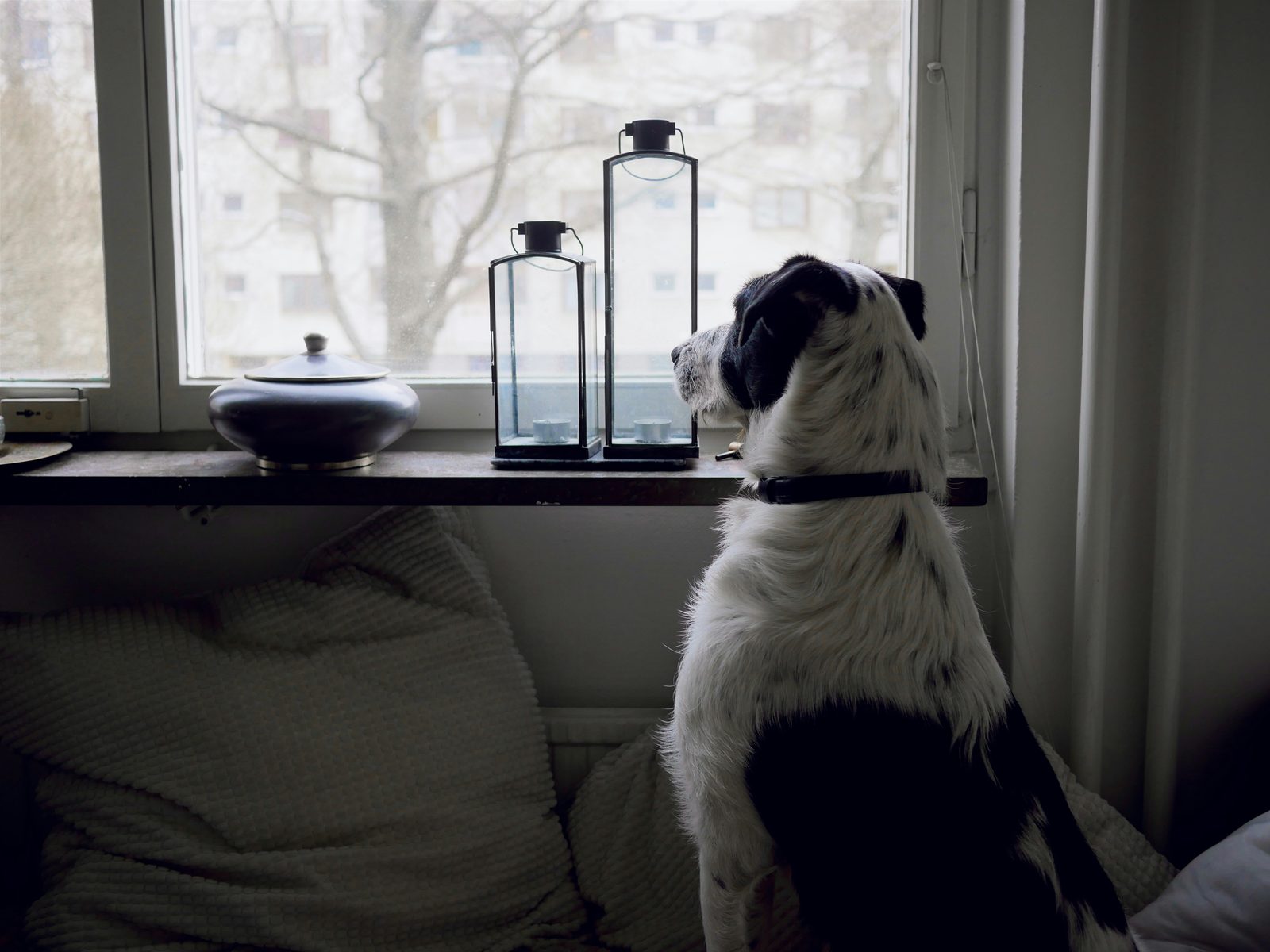
OKAY so picture this: you tiptoe out the front door, super sneaky-like, and twelve seconds in your dog is already shredding the couch cushions and screaming like you’ve abandoned them in a haunted house. Sound familiar? You, my friend, may be living with a dog who has separation anxiety. And listen — this is fixable. It’s a project, but it’s fixable. Let’s go.
First: is it actually separation anxiety?
Plot twist — a LOT of “separation anxiety” is actually just boredom. Or under-exercise. Or a dog who hasn’t been taught what to do when you’re not around. Real separation anxiety is a whole nervous-system thing, and it looks a little different:
- Boredom destruction: chewing happens after they’ve been alone a while, the dog seems calm when you leave, target is usually toys or shoes left out.
- Anxiety destruction: the meltdown starts within minutes (often seconds) of you leaving. Targets are usually exit points — the front door, window blinds, crate. Pacing, drooling, dilated pupils, refusing to eat treats you left.
Other signs of real anxiety: barking that doesn’t stop, pooping or peeing in the house despite being house-trained, refusing food, panting like they ran a marathon. If your dog is doing 3+ of these the moment you leave, yeah, we have separation anxiety.
The truth nobody likes hearing
Separation anxiety isn’t fixed in a weekend. I’m just gonna be straight with you. Expect 4-8 weeks of consistent work. Some dogs take longer. The good news? Dogs with severe SA can absolutely learn to be home alone happily. Tens of thousands of dogs have. Yours can too. Let’s break it down.
Step 1: Find your dog’s threshold
Your dog has a number — a number of minutes they can be alone before they start losing it. For some dogs, that number is 60 seconds. For some it’s 8 minutes. You need to find that number.
Set up your phone to record the room your dog stays in when you leave. Step out. Watch the playback later. Note the exact second the panic starts — usually pacing, whining, or destructive behavior.
That number minus 30 seconds? That is your starting point. No, really. If your dog panics at 90 seconds, you train at 60 seconds. The whole protocol depends on staying under threshold so your dog’s nervous system never gets to the panic zone.
Step 2: Desensitize the leaving rituals
Your dog has memorized your “I’m leaving” pattern. Keys. Shoes. Bag. Coat. Door. They know. They’ve watched you 5,000 times.
For one week, do these things at RANDOM times when you’re not actually leaving:
- Pick up your keys, jingle them, set them down. Sit on the couch.
- Put your shoes on. Take them off. Make a snack.
- Grab your bag. Take it to the door. Come back.
Boring leaving cues = less anticipation panic. Honestly this step alone helps SO much. Dog brains are pattern recognition machines and we’re scrambling the pattern.
Step 3: The slow-build absence game
Here’s where the actual training kicks in. You’re going to leave for very short amounts of time, way under your dog’s threshold, and slowly build up. Like sourdough but for dog brains.
A sample week might look like:
- Day 1: Leave for 30 seconds. Come back, no big greeting, just normal. Repeat 5 times across the day.
- Day 2: 45 seconds. 5 reps.
- Day 3: 60 seconds.
- Day 4: 90 seconds.
- Day 5: 2 minutes.
If your dog panics, you went too fast — drop back to the last successful duration and stay there for two more days. The single biggest mistake people make is going too fast and re-traumatizing the dog. Slow is fast in this game.
By week 4, most dogs are doing 30+ minutes solo. By week 6-8, you’re at 2-3 hours. After that, the rest builds itself.
What NOT to do (and people do constantly)
- Don’t make a huge fuss leaving or coming home. Hi-bye should be boring. Drama on departure tells your dog “yes, this is a big scary thing.” Drama on return tells them they were RIGHT to panic.
- Don’t punish the destruction. When you come home to chewed-up shoes, your dog has zero memory of what they did. Yelling at them just adds “and now my human comes home angry” to the existing pile of trauma.
- Don’t try to power through. Leaving your dog alone for 8 hours every workday WHILE you’re trying to train SA is like trying to fix a sprained ankle by running marathons. You need a daycare friend, a dog walker, or a sitter for the duration of the training. Yes, really.
- Don’t get another dog “to keep them company.” Most of the time this gives you two anxious dogs. Fix the first one.
The medication conversation
Some dogs have severe SA that doesn’t respond to behavior work alone. If your dog is hurting themselves trying to escape the house, breaking teeth on crate bars, or you’ve been at this for 6+ weeks with zero progress — it’s time to talk to a vet behaviorist. Anti-anxiety medication isn’t a cop-out. It’s a tool that gives the behavior training a chance to actually work. There’s no shame in it. Calmer brain = faster learning.
When to call a pro
If your dog is hurting themselves, harming the house in expensive ways, or you’re crying in your car before work — you’ve earned a referral. Look for a Certified Separation Anxiety Trainer (CSAT) or a board-certified veterinary behaviorist (DACVB). These are real credentials, not just “dog trainer” with a website. The CSAT directory is online and they often work remotely on Zoom which is wild and also amazing.
Practice this with Coach Danielle in the Dawg app. Free to download, personalized to your dog. Danielle (or Calvin, your pick) walks you through the SA protocol day by day with timer-based prompts that match your dog’s threshold and check-ins that adjust the plan when you hit a plateau. Same science the CSAT pros use, structured for daily life.
You got this. Your dog has SO much faith in you. Now let’s prove them right. 🎉
