

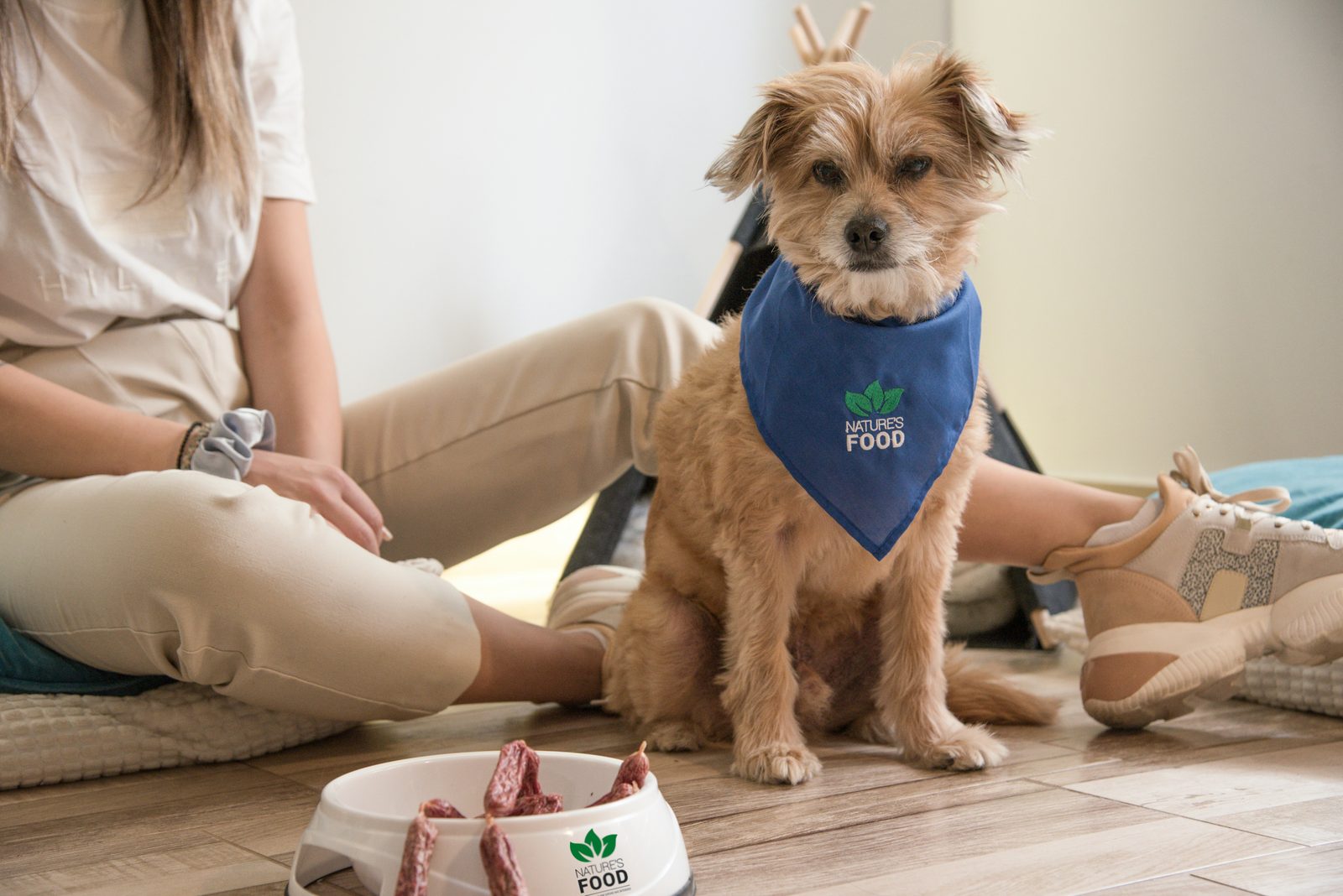
Okay so feeding your dog should be simple, right? Buy bag, pour in bowl, done. EXCEPT the dog food industry has turned itself into a marketing carnival and now there’s grain-free, raw, freeze-dried, kibble that costs more than your groceries, and a TikTok lady telling you to make bone broth from scratch. Let’s cut through this. Here’s what actually matters.
What’s actually in dog food
The first move every dog parent should make: read the ingredient list. Ingredients are listed by weight, highest first. The first 5 ingredients tell you 90% of what you need to know.
What you want to see in the top 5:
- A named meat or meat meal (“chicken,” “chicken meal,” “lamb,” “salmon”). Not “meat by-products,” not “animal digest,” not “poultry.” Named protein = traceable source.
- Whole food carbs (sweet potato, brown rice, oats, peas). Carbs aren’t evil despite what the grain-free marketing says — dogs digest them fine. They just shouldn’t dominate.
- Named fats (“chicken fat,” “fish oil”). Generic “animal fat” is sketchy.
What you don’t want to see in the top 5:
- “Meat by-products” without a species. (“Beef by-products” is fine. Just “by-products” is mystery meat.)
- Corn syrup, propylene glycol, BHA/BHT (preservatives linked to inflammation).
- Multiple types of the same filler (e.g. ground corn + corn gluten meal + corn meal — this is called “ingredient splitting” and it inflates the apparent protein ratio).
If you scan a bag and the top 5 looks good, the bag is probably good. The middle of the bag is just trace nutrients.
The protein conversation
Healthy adult dogs need around 18-25% protein in their diet. Puppies and pregnant dogs need more (~25-30%). Senior dogs with healthy kidneys actually need MORE protein, not less — the old “low protein for seniors” advice is outdated.
What matters more than the percentage is the bioavailability — how much of that protein your dog can actually use. Animal proteins (chicken, beef, lamb, fish, eggs) are highly bioavailable. Plant proteins (peas, lentils, soy) are less so. A bag claiming 28% protein where half of that protein comes from peas isn’t as good as a bag with 22% protein from chicken and salmon.
This is why “high protein” by itself doesn’t mean much. Where’s the protein coming from?
Portion sizing (where most people get this wrong)
Most dog parents overfeed. Not because they’re bad people but because:
- Bag feeding guidelines run high (manufacturers want you buying more food)
- Treats count as food (most people don’t track them)
- “Active” doesn’t mean what you think
The math nobody teaches you: a quick caloric estimate for an average adult dog is 30 × weight in kg + 70, then multiply by a lifestyle factor:
- 1.2 for neutered, lazy
- 1.6 for typically active
- 2.0 for high-energy / working dogs
- 0.8 for weight loss
So a 20kg dog who’s mildly active: (30 × 20 + 70) × 1.6 = 1,072 calories/day. Now check your bag. A typical kibble runs 350-400 kcal per cup. That’s ~3 cups of food. Most owners are feeding 4-5.
Treats count. If treats are more than 10% of daily calories, your meal portions need to come down.
The toxic food list (memorize)
These will hurt your dog. Some kill, some just make them sick. Hard pass on all of them:
- Chocolate (theobromine — dark chocolate is worst)
- Grapes and raisins (cause acute kidney failure; even a few can kill small dogs)
- Onions, garlic, chives, leeks (cause hemolytic anemia; cumulative even in small amounts)
- Xylitol (in sugar-free gum, peanut butter, some baking; causes rapid hypoglycemia and liver failure — THIS ONE IS THE BIGGEST KILLER on this list because it’s in stuff you wouldn’t expect)
- Macadamia nuts
- Alcohol
- Caffeine
- Cooked bones (splinter into the GI tract)
- Yeast dough
- Avocado (the pit is the biggest risk; flesh is fine in small amounts, hold the heavy “raw vegan” servings)
Save the ASPCA Animal Poison Control number in your phone: 1-888-426-4435. Worth the consultation fee if your dog gets into something.
Foods that are genuinely good
Plenty of human foods are great for dogs in moderation:
- Plain cooked chicken or turkey (no skin, no seasoning, no garlic)
- Plain cooked salmon (omega-3s for coat and joints)
- Pumpkin (canned, plain, not pie filling) — magic for both constipation AND diarrhea
- Carrots, green beans, blueberries, apples (no seeds/core)
- Plain yogurt (in small amounts — some dogs are lactose-sensitive)
- Sweet potato (cooked, no spices)
- Peanut butter (xylitol-free!)
- Eggs (cooked, plain)
Use these as training treats or food toppers. Especially helpful for picky eaters or dogs who need to be coaxed back to eating after a vet visit.
Wet, dry, raw, fresh — which is best?
Honest answer: the food your dog will eat consistently and that meets their nutritional needs. That’s the whole answer.
- Dry kibble: convenient, cheap, easy to portion. Pick one from a brand that does feeding trials.
- Wet food: higher moisture (good for dogs who don’t drink much), often more palatable. Pricier per calorie. Goes bad faster.
- Raw diets: can be great when formulated by a veterinary nutritionist; very risky when DIY’d from internet recipes. Salmonella and nutritional imbalance are real concerns.
- Fresh/cooked subscription foods (Farmer’s Dog, Just Food For Dogs, etc): high quality, expensive, palatable. Good option if budget allows.
What MATTERS more than format: pick a brand that conducts AAFCO feeding trials (not just “formulated to meet AAFCO standards”) — this means they actually tested the food on real dogs, not just calculated it on paper.
Weight check: the rib test
You can’t trust a scale alone — a healthy Greyhound looks bony, a healthy Bulldog looks chunky. The right way to assess weight on any dog:
- Rib test. Run your hands along your dog’s ribs. You should be able to feel them easily, with a thin layer of cover over them. Like the back of your hand. Can’t feel ribs = overweight. Ribs poking through = underweight.
- Tuck test. Looking from the side, your dog’s belly should tuck up between their ribs and their hips. No tuck = overweight.
- Waist test. Looking from above, your dog should have a visible waist between their ribs and hips. Sausage shape = overweight.
If you’re hitting 3 out of 3 on overweight, cut their food by 10-15% (not more — crash diets are dangerous), increase walks gradually, and re-check in 4 weeks.
Supplements: what’s worth it, what’s not
Most healthy adult dogs on quality food don’t need supplements. But a few have real evidence behind them:
- Omega-3 fish oil — coat, joints, inflammation. Worth it for almost any dog.
- Glucosamine + chondroitin — joint support, especially for large breeds and seniors.
- Probiotics — if your dog has digestive sensitivity. Less universal benefit than the supplement industry suggests.
What’s NOT worth it: most “immune boosters,” CBD chews without third-party testing, “joint supplements” without glucosamine/chondroitin in them, anything that promises behavior changes.
When to get professional help
Talk to a vet — ideally a board-certified veterinary nutritionist (DACVN) — when:
- Your dog has a diagnosed condition (kidney, liver, GI, diabetes, severe allergies) that needs a prescription or precisely formulated diet.
- You want to feed a homemade or raw diet long-term. The bioavailability + balance math is harder than the internet makes it look, and a deficiency can cause permanent damage in months.
- Your dog is losing or gaining weight despite consistent feeding at the right portions. Could be metabolic, parasitic, or something else worth ruling out.
For most healthy dogs, a quality kibble + the rib/tuck/waist test gets you there. But if anything feels off, the vet visit is cheaper than the future emergency.
Practice this with Coach Danielle in the Dawg app. Free to download, personalized to your dog. Inside the app, Danielle calculates a custom nutrition plan from your dog’s exact weight, activity level, and any allergies — daily caloric targets, meal portions, treat budgets, refreshed when your dog grows or changes.
